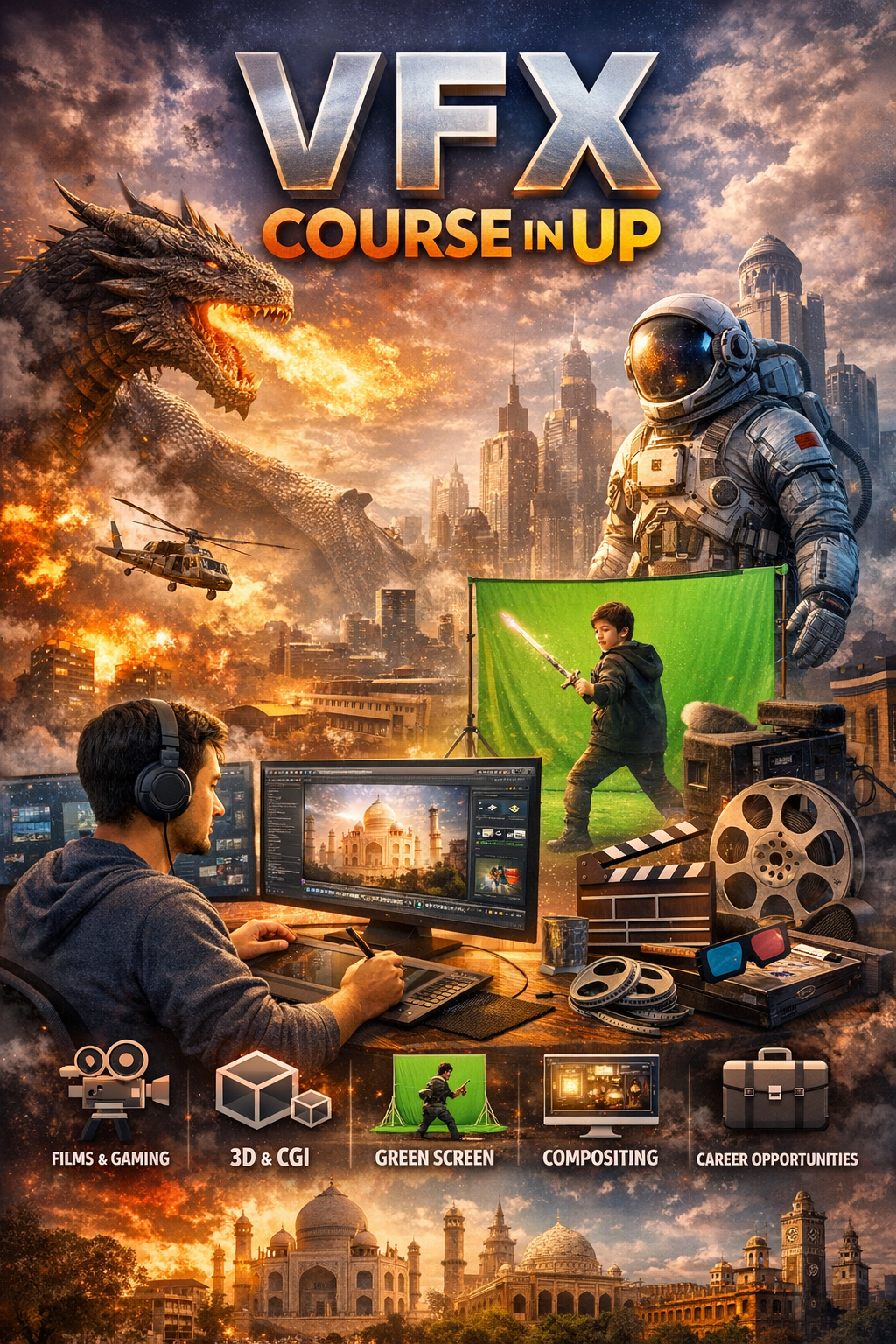
VFX Course in UP: Build a Career in the World of Visual Effects
The entertainment industry has transformed dramatically over the last decade. From blockbuster movies and web series to advertisements and video games, Visual Effects (VFX) have become a major part of modern storytelling. If you are creative, passionate about films, and interested in technology, enrolling in a VFX course in Uttar Pradesh (UP) can be a great step toward a successful career.
In this blog, we will explore what VFX is, why learning VFX is a great career option, and how a VFX course in UP can help you enter the booming media and entertainment industry.
What is VFX?
Visual Effects, commonly known as VFX, refers to the process of creating or manipulating imagery outside the context of a live-action shot in filmmaking. VFX artists combine real footage with computer-generated images to create scenes that would be difficult, dangerous, or impossible to capture in real life.
For example, explosions in action movies, fantasy creatures in sci-fi films, or large-scale environments like futuristic cities are all created using VFX techniques.
VFX is used in:
- Movies and web series
- Television commercials
- Video games
- Animation films
- Social media content
- Virtual production
Because of the increasing demand for digital content, the need for skilled VFX professionals is also growing rapidly.
Why Choose a VFX Course in UP?
Uttar Pradesh is becoming an emerging hub for creative and digital industries. Cities like Lucknow, Noida, and Kanpur are witnessing the growth of media production, animation studios, and digital marketing agencies.
Here are some reasons why students are choosing VFX courses in UP:
1. Growing Media Industry
With the rise of OTT platforms, digital advertising, and independent filmmaking, the demand for VFX artists has increased significantly. Many studios are constantly looking for talented professionals who can create high-quality visual effects.
2. Affordable Education
Compared to metro cities like Mumbai or Bangalore, VFX courses in UP are generally more affordable. Students can access quality training without spending a huge amount of money.
3. Industry-Relevant Skills
Most professional VFX courses focus on practical training and real-world projects. Students learn to work with industry-standard tools and software used by professionals worldwide.
4. Job Opportunities
After completing a VFX course, students can explore job opportunities in animation studios, production houses, gaming companies, advertising agencies, and even freelance platforms.
What You Will Learn in a VFX Course
A professional VFX course usually covers multiple aspects of visual effects production. The curriculum is designed to help students understand both the creative and technical sides of the industry.
Some of the key topics include:
1. Introduction to VFX
Students learn the basics of visual effects, including how VFX is used in films and digital media.
2. Compositing
Compositing is the process of combining multiple visual elements into a single image or scene. It is one of the most important skills for VFX artists.
3. Green Screen Techniques
Green screen or chroma key technology allows artists to replace backgrounds and create new environments digitally.
4. Motion Tracking
Motion tracking helps match computer-generated elements with the movement of real footage.
5. 3D Integration
Students learn how to integrate 3D objects into real-life video footage to create realistic effects.
6. Lighting and Rendering
Lighting and rendering techniques help create realistic scenes that match the original footage.
7. Industry Software
A good VFX course also teaches popular industry software such as:
- Adobe After Effects
- Nuke
- Autodesk Maya
- Blender
- Houdini
Learning these tools helps students work efficiently in professional environments.
Career Opportunities After a VFX Course
Once you complete a VFX course, several career paths become available. The entertainment and media industry offers a wide range of roles for skilled professionals.
Some popular career options include:
- VFX Artist
- Compositing Artist
- Roto Artist
- Motion Graphics Designer
- 3D Artist
- Video Editor
- Matchmove Artist
Many students also choose to work as freelancers, creating VFX for YouTube creators, filmmakers, and digital marketing agencies.
Salary Expectations
The salary of a VFX professional depends on skills, experience, and the company they work for.
Typical salary ranges in India:
- Entry-Level: ₹2.5 – ₹4 LPA
- Mid-Level: ₹5 – ₹8 LPA
- Experienced Professionals: ₹10 LPA or more
Freelancers and experienced artists working on international projects can earn even higher incomes.
Who Should Join a VFX Course?
A VFX course is ideal for people who:
- Are passionate about movies and visual storytelling
- Enjoy creativity and digital design
- Want to work in the entertainment industry
- Like working with technology and software
- Want to build a career in animation, filmmaking, or gaming
Even students from non-technical backgrounds can learn VFX with proper training and practice.
Duration of VFX Courses
VFX courses come in different durations depending on the level of training:
- Short-Term Courses: 3–6 months
- Diploma Courses: 6–12 months
- Advanced Programs: 12–18 months
Longer courses usually include advanced topics and portfolio development.
Importance of Portfolio in VFX
In the VFX industry, your portfolio matters more than your degree. A strong portfolio shows your creativity, technical skills, and ability to solve visual challenges.
During the course, students usually work on projects such as:
- VFX shots for short films
- Green screen compositing
- 3D integration projects
- Motion graphics videos
These projects help build an impressive portfolio that can attract employers.
Future of VFX in India
The future of VFX in India is extremely promising. With the growth of OTT platforms, gaming industries, and international film collaborations, the demand for VFX professionals continues to rise.
Many Indian VFX studios are now working on global projects, including Hollywood films and high-end web series.
As technology evolves with virtual production, AI tools, and real-time rendering, the industry will continue to create exciting opportunities for skilled artists.
Conclusion
A VFX course in UP can open the door to a creative and rewarding career in the media and entertainment industry. With the right training, practical experience, and dedication, students can develop the skills needed to work on films, advertisements, games, and digital content.
If you dream of creating stunning visuals, cinematic effects, and immersive digital worlds, learning VFX could be the perfect path for you.
The demand for talented VFX artists is only going to grow in the coming years, making this the perfect time to start your journey in the world of visual effects.